
Of all the photographic genres, there can be none more hotly debated than that commonly called ‘street’. And street photography is certainly one of the most fascinating and compelling photographic genres — for reasons we’ll touch on here and there in the egocentric account below.
Now, if I go through a quick tour of my own attempts at street photography in Braidwood, it’s just because to try embracing the whole gamut of the genre would require a massive tome, and none of us have time for that. A small town gives us a manageable canvas. And regarding definitions, perhaps in just this one way, street resembles porn — in the slightly paraphrased words of U.S. Supreme Court Justice Potter Stewart in Jacobellis v. Ohio (1964): while it’s difficult to define, you’ll know it when you see it.
So, by way of example, here are some from my personal fave, Henri Cartier-Bresson:
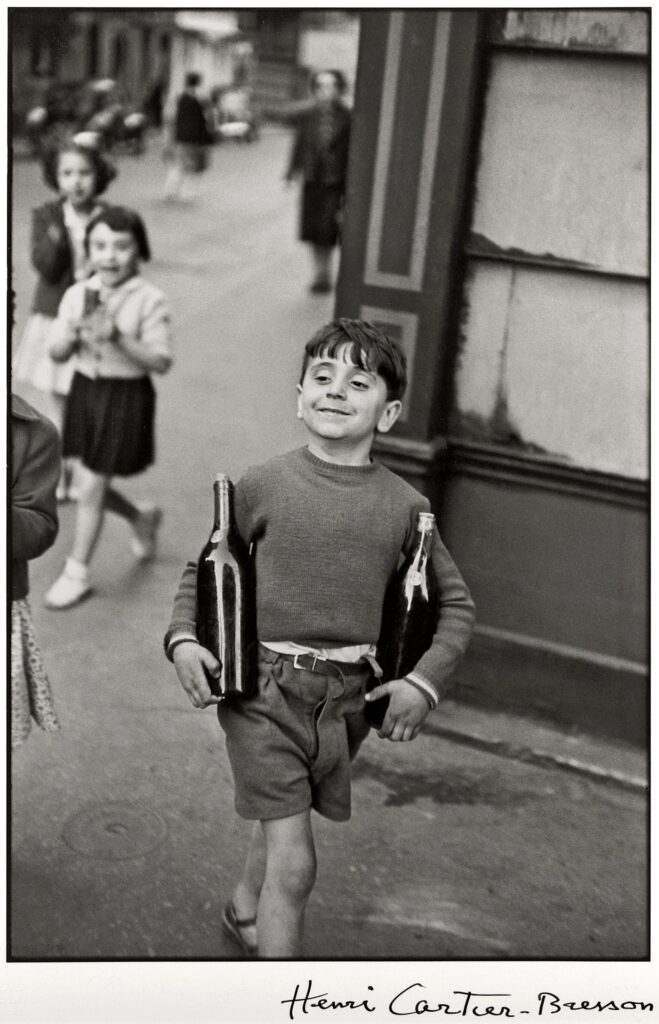


This French master was hugely influential in the development of the genre, and not just because his style spawned many imitators, but because his 1952 book was titled Images à la sauvette — The Decisive Moment. It’s a good start: street photos that evoke a response often show a moment in time, captured forever by the camera. But other markers are also present: the scenes are out-of-doors, they’re urban, and they’re monochrome. Many an online photo bro will argue that these are all essential. But take, say, Joel Meyerowitz, who produced beautiful colour street shots:

I could go on and on, but for me, street is mainly about people. Yes, the name suggests an urban setting, and perhaps some great street pics don’t feature people, but the human figure tends to bestow something of a narrative. What are they thinking? What’s the relationship between them? They encourage us to speculate on the human interactions captured in that moment.
Now, during our time in Braidwood, my photos have tended toward more bucolic subjects: birds, animals, landscapes, weather. But within the confines of our hamlet, some street is eminently possible.

Yes, it’s in colour — let me break it to you now, all my street stuff is in colour. It adds something. The depiction of men discussing the vintage ute above gains from the shades of blue that echo the ute’s baby-blue paintwork. (I think so anyway.)
But don’t take my word for it: which of the pics below do you prefer?


I’m guessing the use of colour can highlight a particular part of the composition or work with other colours to provide a pleasing image, while monochrome reduces distractions, adding a kind of unity to the shot. Horses for courses.
Here are some small human stories in colour that have popped up on occasion on the streets of our town:


Hey, I’m no Cartier-Bresson, but these do give a sense of some of Braidwood’s people and what they do. I was a bit disappointed in the first, because the fruitseller’s chicken hat isn’t clearly outlined, but maybe his personality, expressed in his face, makes up for that. The tiny horse makes the viewer look twice (I hope) — what is going on there? As does the man executing his acrobatic dance moves to the strains of the outdoor band.
I think the common bicycle can also make an evocative element within a street photo (see Henri’s second, above) and have probably done this subject to death, but I reckon this one tells you something about the man who built the bike:

I just wish he was looking at the lens — his face would give the whole thing a focal point — and a better idea of his personality. But perhaps it’s possible to just suggest a human story without a human in the frame at all. Things used or made by people also tell something of a tale — or perhaps just make us want to know more:


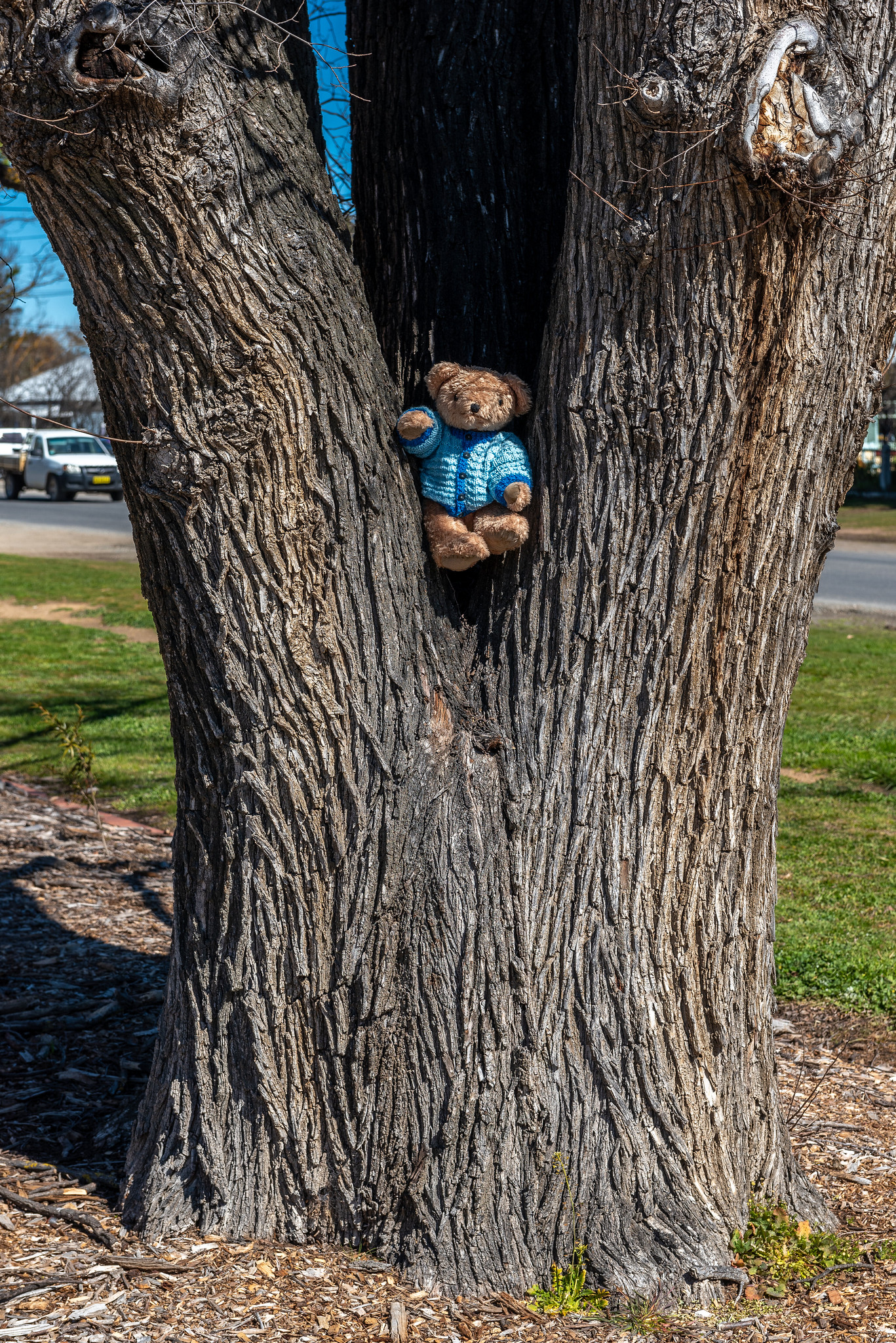
And thus to the ones I can’t really class as ‘street’ — apart from the fact that they were taken in the street and portray something about the people whose spaces these are.


(Click on these to appreciate their full awesomeness).
That’s pretty much it for the streets of Braidwood. And we haven’t even gone into some of the other hills our photo bros will die on: some say street must be shot on film; others that only wide-angle lenses must be used; or that people shots should be candid and wholly unposed. All make for good street shots; none is essential in my opinionated . . . opinion.
Next — or sometime in the future: are travel photos street photos? And will that be an excuse for me to foist my pics from London, Sydney, Hanoi or Bulawayo on you? Watch this carefully curated space.
You must be logged in to post a comment.