
Well, I suppose there’s a lot to be said for letting nature take its course and waiting for things to happen, rather than fretting and overthinking.
We’re talking Kestrels, of course. When I last left you, all was ahoo and awry, with no clarity on where or how many — if any — Nankeens were nesting hereabouts. There was an element of gloom that the usual nesting spot, the Block of Flats tree, was without a nesting pair for the first time in some years.
Since then I’ve occasionally popped past both sites where I thought there might be nests, without seeing anything to excite the ornithological senses. Indeed for a couple of weeks there wasn’t much sign of anything at all. There was a night or two of pretty low temperatures, too — 2C, which isn’t exactly frigid, but for summer is taking the piss a bit. I hold these nights responsible for ruining the prospects of a cute pair of Sacred Kingfishers in the park. They looked to be pretty settled beforehand, but there hasn’t been sight nor sound after those chilly nights. Had the Kestrels also moved on to somewhere warmer?

Anyway, let’s get to the point, shall we? To whit: last week I took Archie to the top of Gillamatong Lane, where he likes a contemplative wee with the vista of the Southern Tablelands stretching away into the distant purple horizon. Idly, while he was detained in matters of interest only to himself, I took up my binoculars. And in seconds I saw a Kestrel streak across the valley below, riding a gust of wind to gain height rapidly, and hovering as its species will.
It had come from the direction of the Block of Flats, so I trained the optics thereon — and there was unequivocally something in one of the hollows. Now, I had noted the presence of a Kestrel sitting high in the tree’s branches a few days previously — but by then the conviction had formed that they weren’t nesting there, so I assumed she was just taking advantage of this high perch to take a break and look about for a spot of prey.
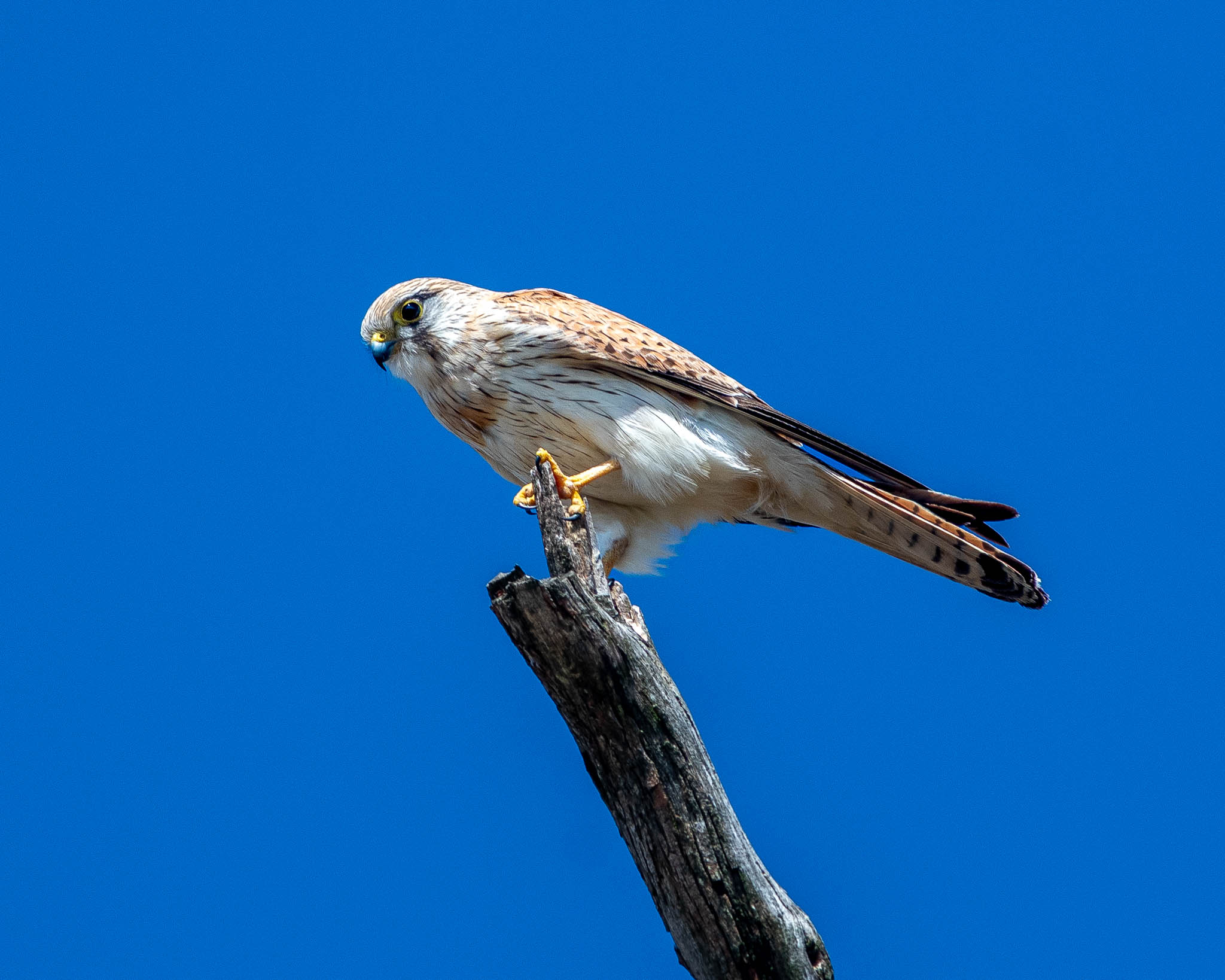
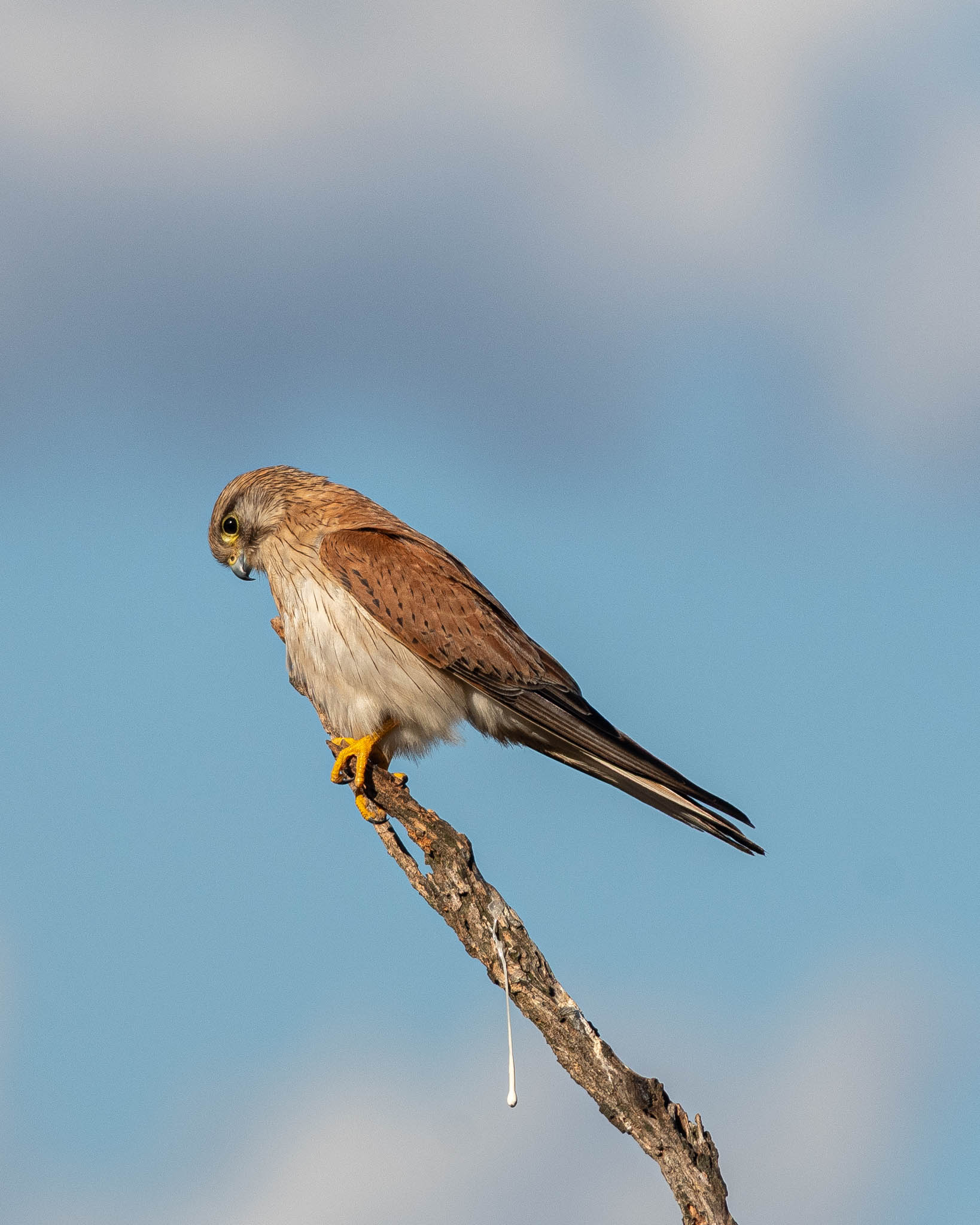
Anyway, after spotting something in that hollow, I bundled the dog in the car and rolled down the hill for a closer look. And sure enough, it was three kestrel chicks! All looking bright-eyed and reasonably mature — several weeks old, at least. They were quite large and their cinnamon-and-cream plumage was well advanced.


Clever Kestrel parents. They’d chosen a less exposed nesting hole than previously, and had kept pretty effectively under cover during the incubation and hatching process. Can’t fault them for that!
Since that day I’ve passed by a few times to watch feeding time. It’s a less photo-friendly site: the opening faces west, so is in shadow in the early morning. There’s a line of fir trees which hide the entrance unless you find a gap, of which there are few. But that’s OK — all the better to keep up that stealthy presence and keep the babies safe.


You must be logged in to post a comment.