
Now that the Kestrel chick has taken wing and left the confines of the nest forever, let’s have a look back over how she’s changed along the way.
Here’s how she — or one of her siblings — looked when freshly hatched and little more than a bundle of grey fluff and a wide-open beak.

Quite rapidly, it was clear that there were three chicks, as mentioned above. By now they were bigger and visibly stronger, coming to the mouth of the nest to wait for food to arrive. And they grew noticeably by the day.

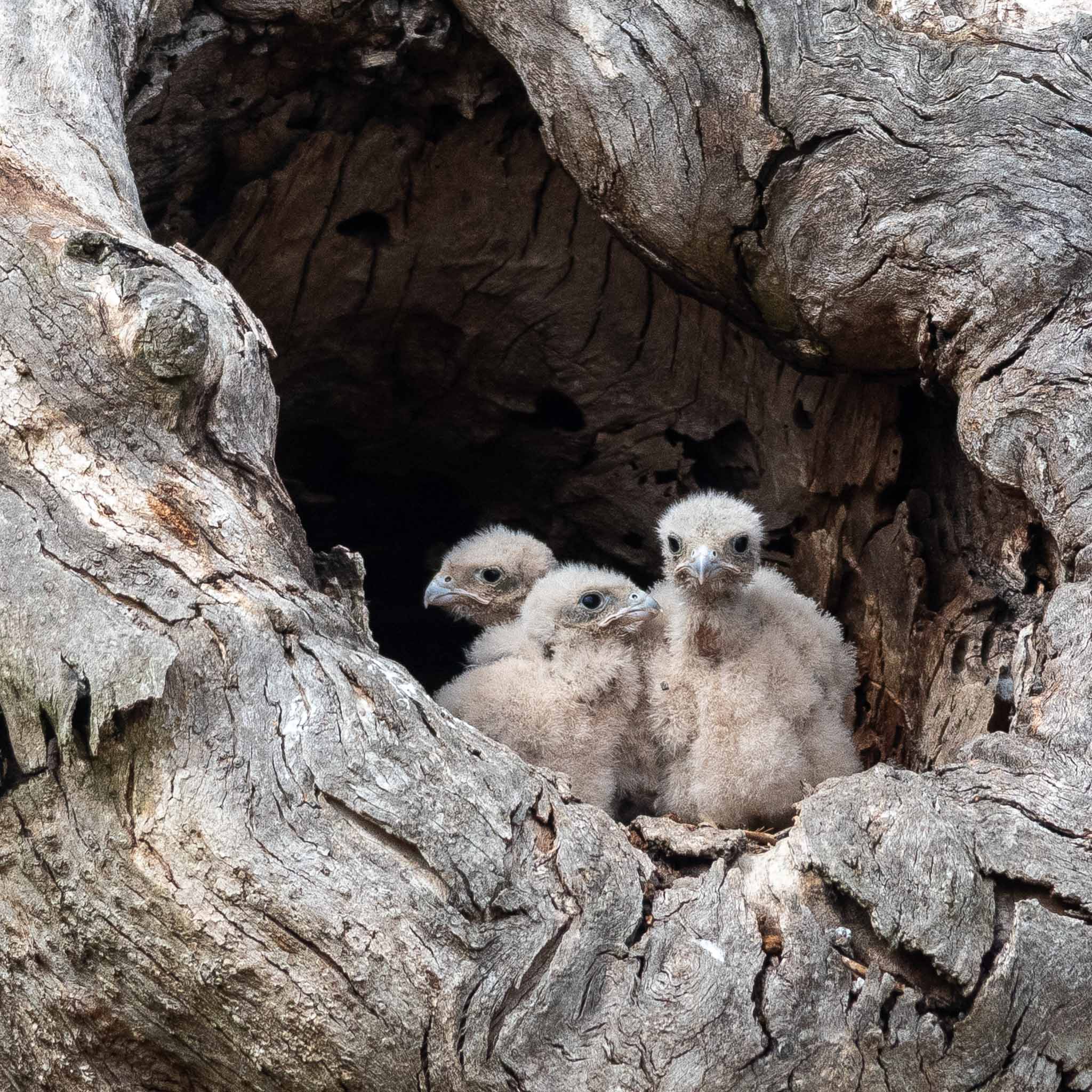
After the weakest chick disappeared from the nest, the remaining two competed for food. When struggling to grab a nice beetle or lizard, you could see their primary flight feathers emerging.


And a week later, our surviving chick was starting to show some colour sprouting through the grey fluffy down.

And those colours started to assert themselves pretty strongly over the next few days — you can see the species’s distinctive cinammon-and-chocolate spots and stripes developing. Note the bits of fluff still on her wings and forehead.


At this time, the chick was frequently to be seen grooming herself — which all birds do to keep their feathers in good condition, but this also seemed to be an effort to get rid of the fluff. And sometimes it got stuck in her beak.


And around that time, it became clear that the chick’s white ‘trousers’, after which the species gets its name, were developing well.

Soon after this, the chick gained enough strength and confidence to leave the nest altogether. For the first time, it was possible to see the bird in the round — and the grooming and preening continued.

When a parent approached with a snack, you could appreciate the full beauty of the little bird’s plumage. And note the perfection of her camouflage — the colours mimic the tree’s exactly.


Finally, as reported, the little Kestrel was fully fledged and able to fly. And that’s where we’ll pick back up on the kestrel family’s progress when next I take up this pen again!
You must be logged in to post a comment.